
Yogo Sapphires Versus the Rest of Montana
If you spend an afternoon reading about Montana sapphires, you will hit the word Yogo, and the reading will get confusing fast. Yogo is a Montana sapphire. It is also almost nothing like the Montana sapphires I work with.
Both things are true. Here is the difference.
Two ways a sapphire gets to the surface
Yogo comes out of a dike in Judith Basin — a narrow vein of igneous rock running for miles through limestone, with the stones still locked in the host rock that formed them. It is hard-rock mining. Tunnels, ore, and slow extraction.
The other Montana deposits are alluvial. Water moved the stones out of their source rock over geologic time and sorted them into gravel benches. Rock Creek near Philipsburg is the largest of these, and the bars along the Missouri are another.
Hard rock and gravel. That difference explains nearly everything else.
What Yogo is
A cornflower blue, even across the stone, and famously consistent. Yogo material is not heated, because it comes out of the ground with its color already there. That is genuinely rare, and it is the source of the reputation.
It is also small. The crystals form thin and flat, which means most finish well under a carat, and a clean Yogo above one is a serious object with a price to match. The mining is expensive because it is hard rock, and the operation has opened and closed repeatedly over more than a century.
Consistent color, natural saturation, small sizes, high prices, limited supply. That is the Yogo profile, and it is a good one.
What the alluvial stones are
Not consistent. That is the point of them.
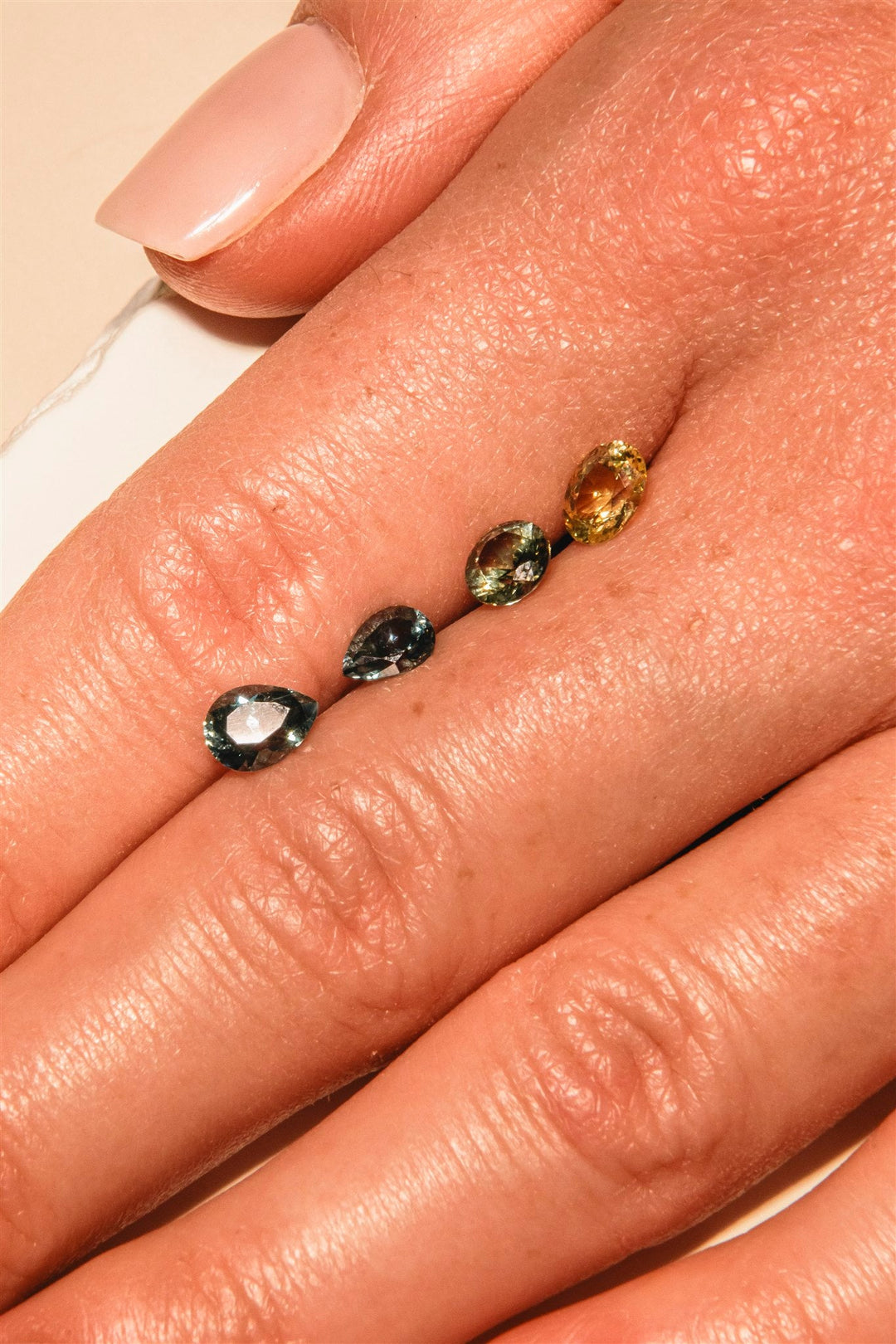
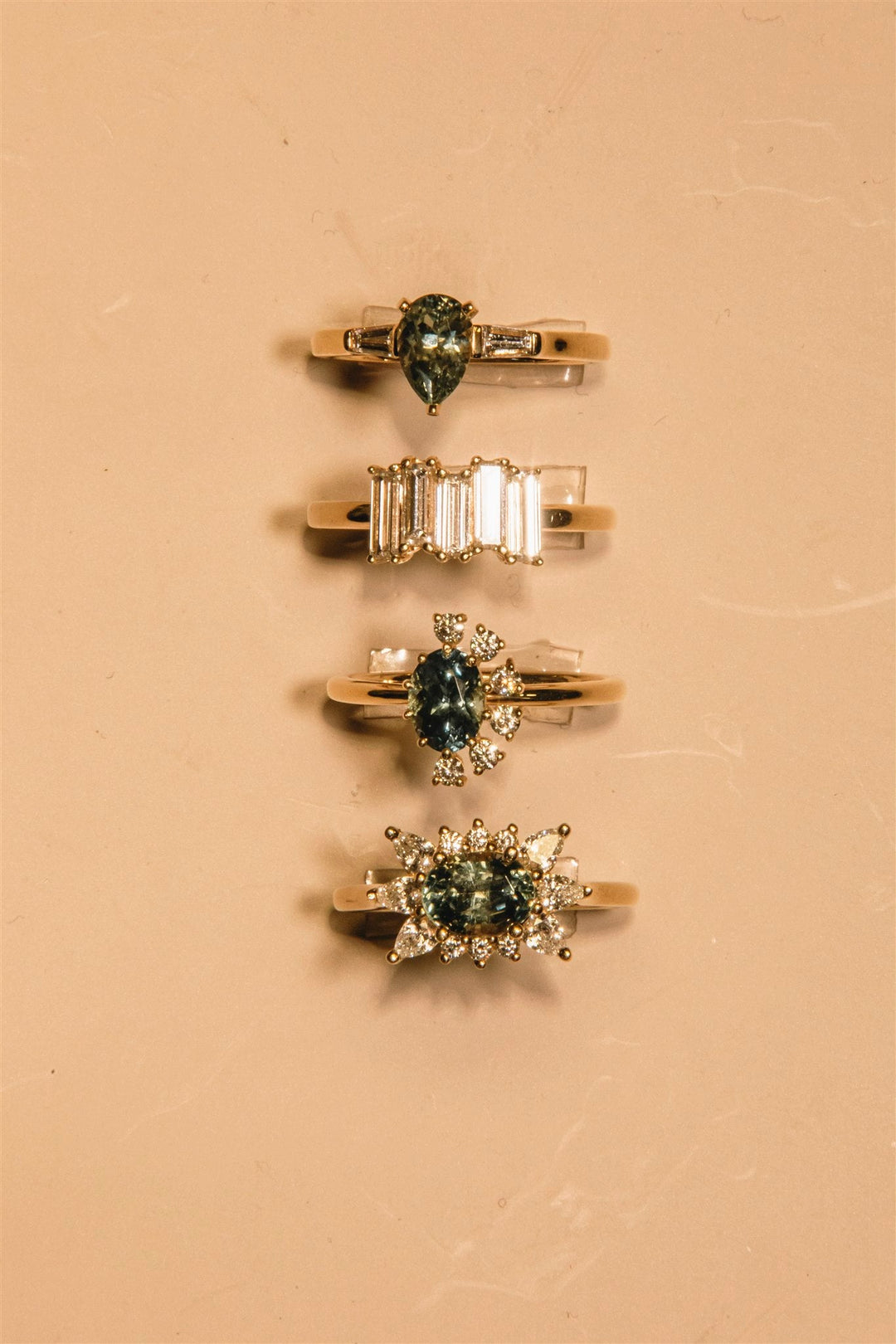
The gravel deposits produce teal, sage, silvery green, golden, peach, and parti stones that carry two colors at once. No two are the same, which is a challenge if you are matching a pair of studs and the entire appeal if you are choosing a single stone.
They run larger than Yogo and they are almost always heated, because much of the rough is pale until it is. More on heat treatment here.
Choosing between them
If you want that specific cornflower blue, untreated, and you accept a small stone at a high price, Yogo is the answer and I will tell you so. Several excellent Montana jewelers work with it.
I don't. I work the alluvial deposits, and the reason is the color range. A teal that shifts toward green in low light is not a compromise on cornflower blue. It is a different proposition, and it happens to be the one I find worth building around.
There is no better stone here. There is a stone that suits what you are after.
Read the complete guide to Montana sapphires for the full picture on all three deposits, or what each color tends to mean.
Elizabeth Graham is the founder of Talismania, based in Red Lodge, Montana.