
Are Montana Sapphires Heat Treated?
Yes. Nearly all of it, and nearly all of mine.
That is the short answer. It is a question that tends to get a vague one, so here is the longer version.
What heat treatment does
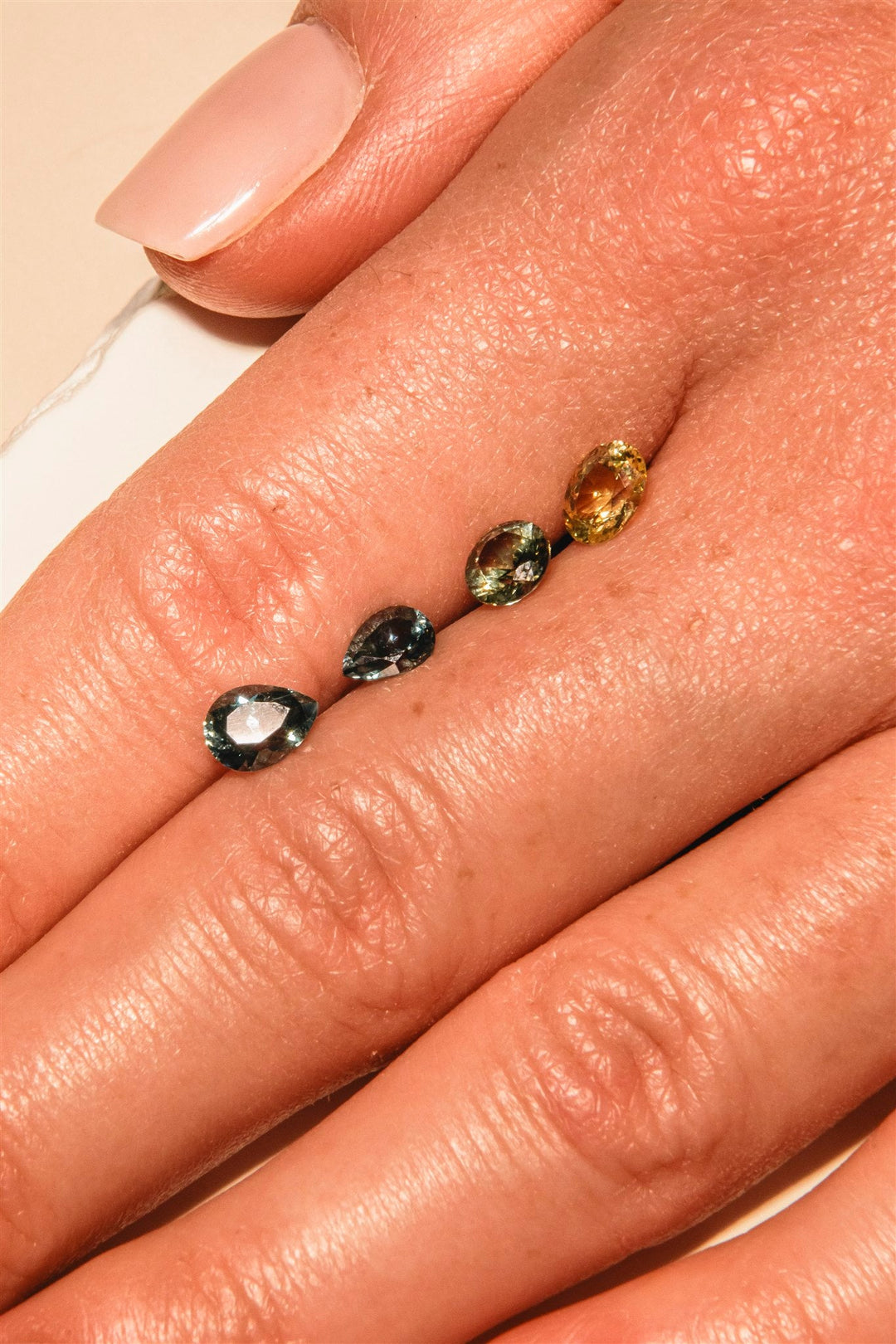
Rough sapphire often comes out of the ground with its color held back. Heat, applied for hours at temperatures that would destroy most materials, rearranges trace elements inside the crystal and brings the color forward. In Montana material, iron and titanium are doing most of that work.
The change is permanent. It does not fade, it cannot be reversed, and it takes nothing away from the stone's durability. A heated sapphire is the same mineral at the same 9 on the Mohs scale as an unheated one.
What heat cannot do is invent a color that was never in the crystal. It works with what is already there.
Why it became standard here
Sapphires turned up at Rock Creek in 1892, in the sluices of men looking for gold. They were small, naturally rounded, and mostly pale — silvery, or a washed-out green, rather than anything you would set in a ring.
What they were good for was precision mechanics. For roughly forty years Montana sapphire was shipped by the ton to Switzerland and ground into watch bearings. During the Second World War, operations on the Missouri River kept running under a federal exemption because the stones had military uses: bearings for bombsights and torpedoes, abrasives in grinding wheels. Synthetic corundum eventually took that market, and the deposits went quiet.
Heat is what brought them back. The GIA puts it plainly — early production here was mostly industrial, and it was modern heat treatment that made these deposits workable as gemstone mines at all.
So heat is not a shortcut applied to an already-beautiful stone. It is the reason the stone is in front of you.
What unheated means, and what it costs
Some stones come out of the gravel already saturated. Those get sold as unheated, and they carry a premium that can be substantial, because the pool is small and finding one is a matter of luck rather than process.
Yogo sapphires are the exception at the deposit level — they are naturally cornflower blue and are not treated at all. Everything else in Montana is a case-by-case question.
I do work with unheated stones. When a piece uses one, the piece says so. Everything else in the collection is heated.
How to ask
Ask directly: is this stone heated? Any jeweler should be able to answer without hesitating.
If the answer is a qualifier — traditionally treated, enhanced, as is standard in the industry — that is not the same as an answer. Those phrases are all technically true and none of them tell you anything.
A seller who knows their supply chain will know how the stone was handled. A seller who does not know is telling you something too.
Why it matters
Not because heat is a compromise. Because a stone you were told the truth about is a different object than one you were not.
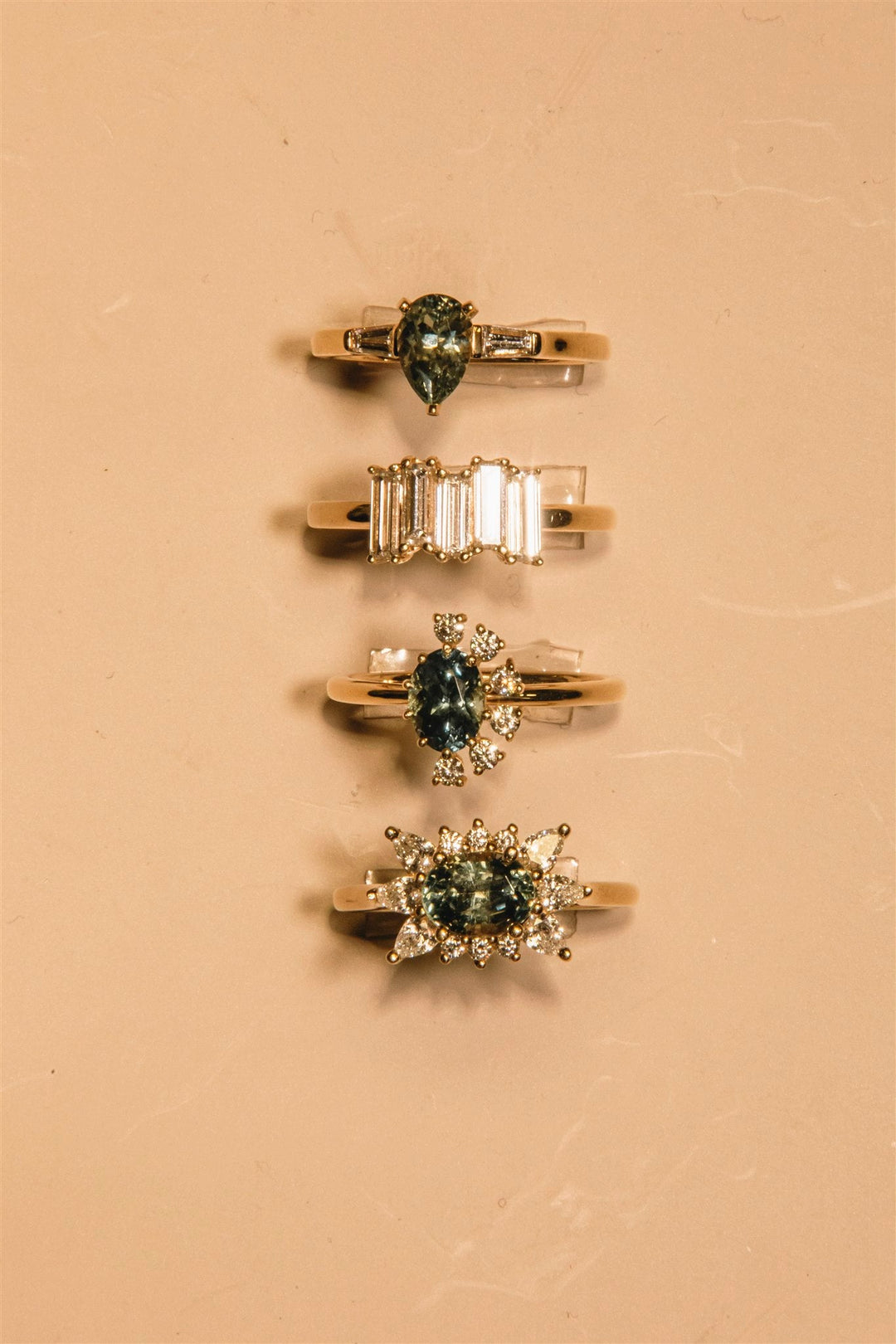
Every stone we set has its treatment status disclosed, in writing, without being asked. More on our materials and craft, or read the complete guide to Montana sapphires for the full background.
Elizabeth Graham is the founder of Talismania, based in Red Lodge, Montana.