
How a Montana Sapphire Gets Cut
A cut sapphire has lost most of itself. A well-cut sapphire typically finishes at 20 to 30 percent of the weight of the rough it came from. Most of the stone is gone, and where it went was a decision someone made.
With a diamond, that decision is largely arithmetic. Diamond is cut to a proportion, because the value is in the light performance and the light performance is a solved problem. Sapphire is not like that.
Some of the loss is just geometry
Montana rough tends to come out of the gravel relatively round. A faceted gem is essentially a cone — flat on top, pointed underneath. Going from one shape to the other costs weight before anyone has made a single aesthetic decision.
The rest is orientation, and that is where the judgment lives.
The stone tells you where to cut
Color in sapphire is not evenly distributed. It sits in zones and bands, laid down as the crystal grew, and it reads differently depending on which direction you look through it. Turn a piece of rough a few degrees and the color moves.
So the cutter's first job is to find the orientation where the stone looks like itself. Everything after that — the shape, the depth, the final weight — follows from that one choice.
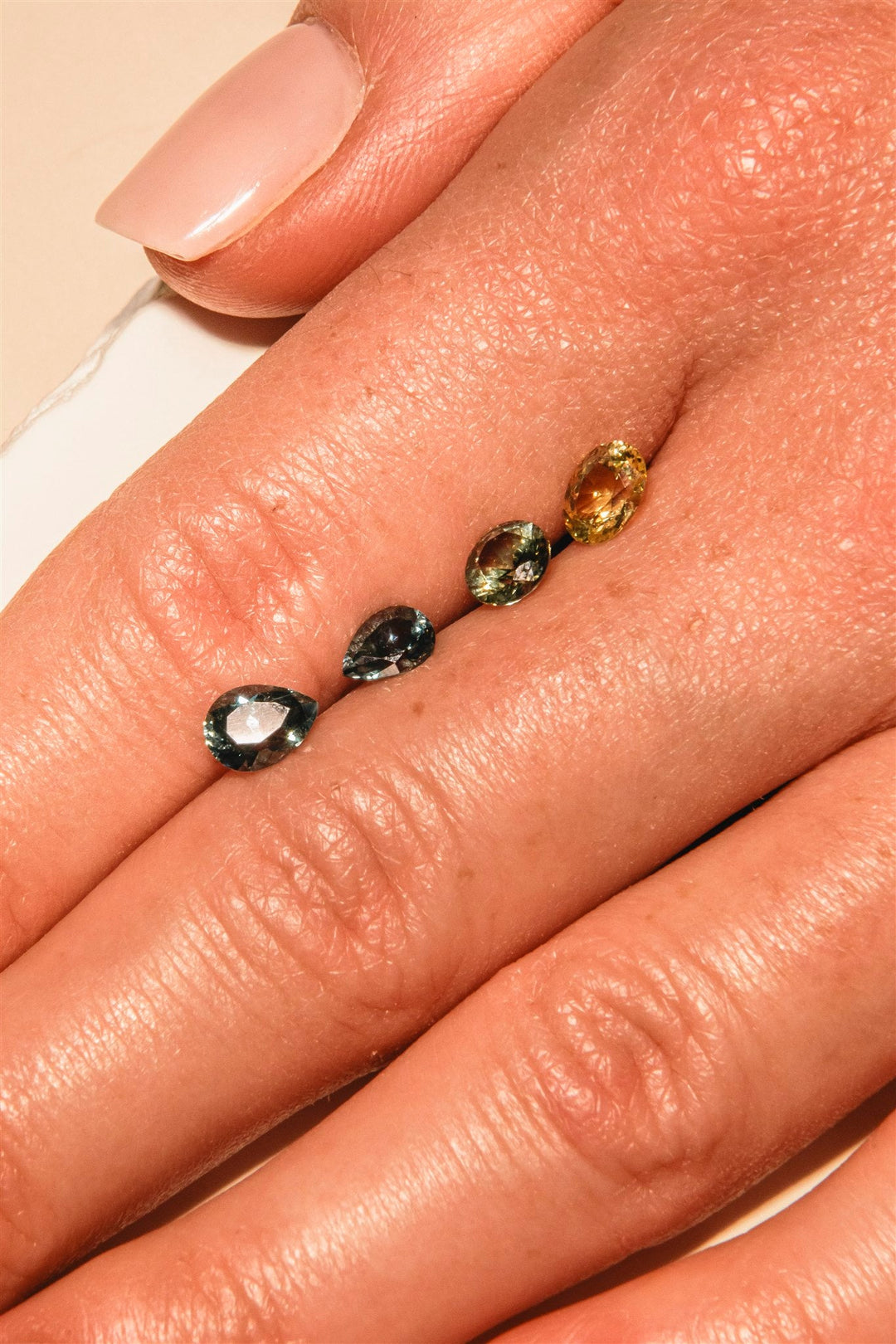
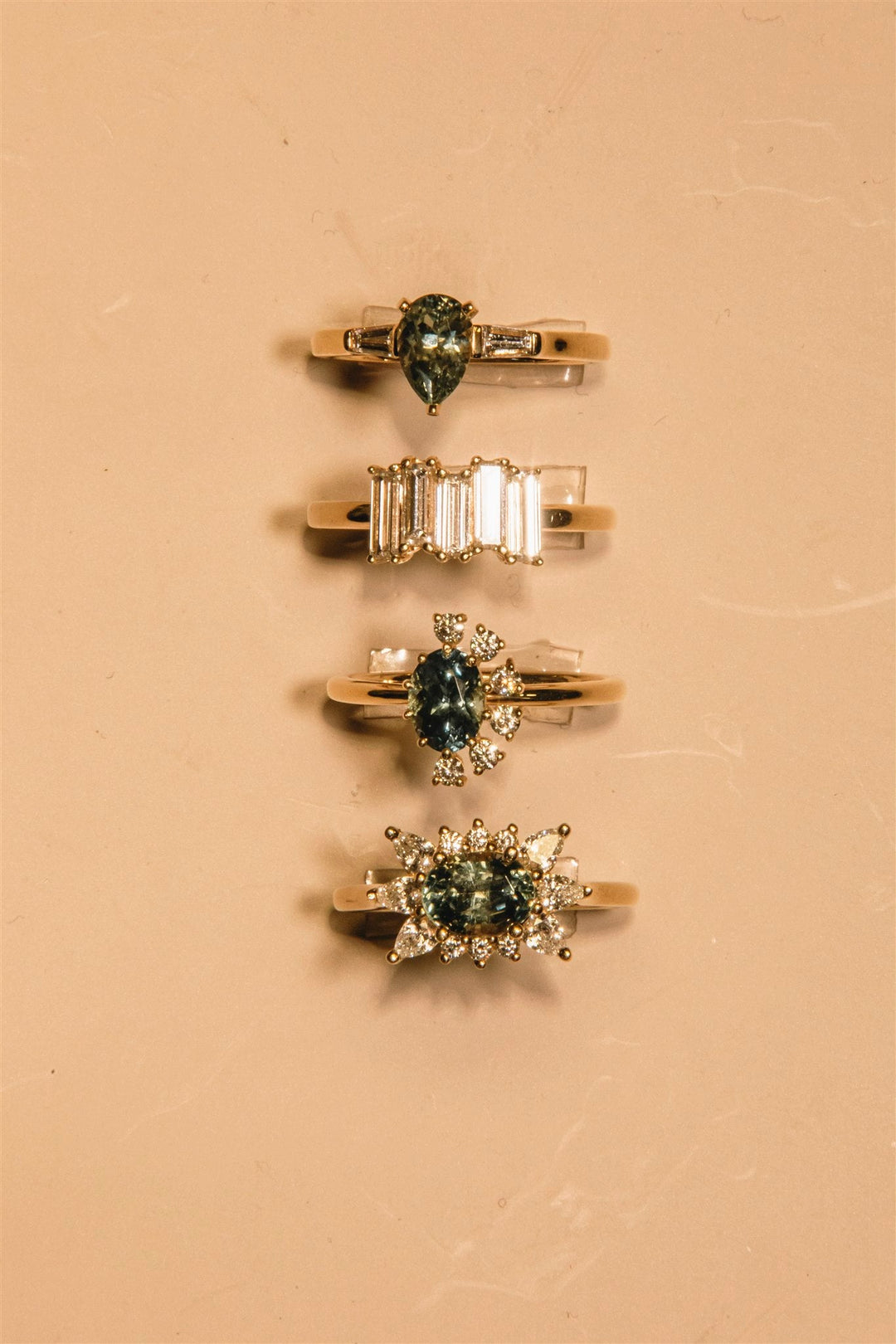
This is why a Montana sapphire is often cut to an unexpected outline. An oval that runs a little long, a pear that is not quite symmetrical, a step cut where you expected a brilliant. Those are not compromises. They are what the color asked for.
What gets sacrificed
A cutter can orient a stone to keep as much material as possible and accept whatever color that yields. Or they can find the axis where the color is best and cut to it, even when that means a smaller finished stone.
The second stone weighs less and costs more per carat. It is also the one you would pick up off the table.
This is the practical reason two Montana sapphires of the same size can look nothing alike. They were cut by people answering different questions.
Where ours are cut
Two places, and it depends on the stone.
One-of-a-kind work and center stones above a carat are bought direct from Montana purveyors and cut in Montana. These are the stones where the orientation decision carries real consequences, and they are handled by people who have been reading this material for years.
Production-run stones — the studs, the smaller settings, the pieces made in quantity — are expert cut by our manufacturing partner.
This is driven by different objectives. The first is the final stone as a one-of-a-kind piece of art. The second is precision and reliability. Both are expert hands optimizing for beauty.
Read the complete guide to Montana sapphires for where the rough comes from, or our materials and craft page for how a piece gets made.
Elizabeth Graham is the founder of Talismania, based in Red Lodge, Montana.