
What Montana Sapphires Mean, By Color — A Wearer's Field Guide
Color is the first thing a Montana sapphire tells you about itself. Before clarity, before cut, before carat — color. And in our work across the consultation table, the color a person is drawn to almost never reads as random. It tracks. People tend to recognize the stone that fits the moment they are in, and the color carries most of that recognition.
What follows is what we have observed about each color and what wearers tend to assign to it. Not prescriptions. Observations. Take what fits.
Teal — for moments of decision
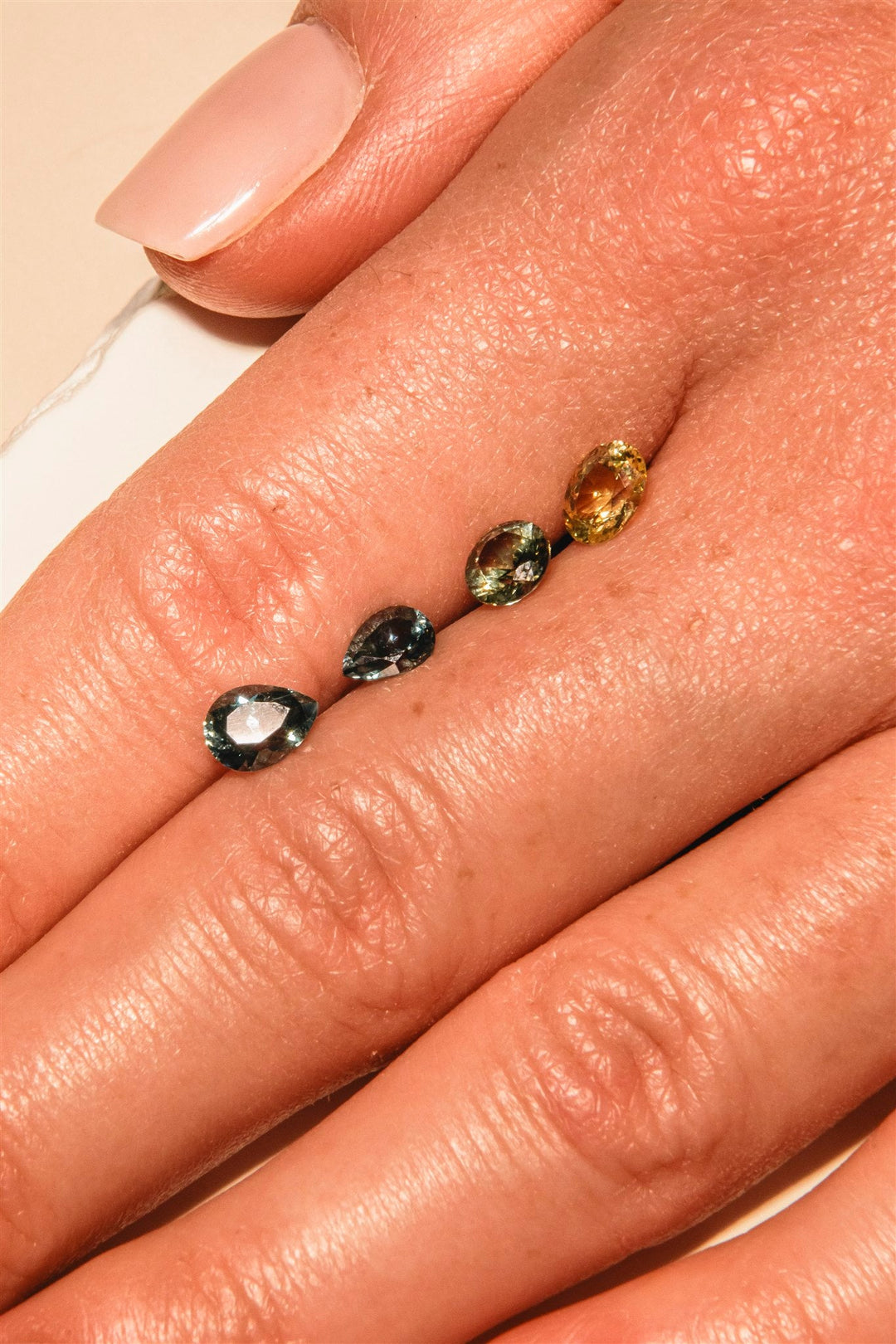
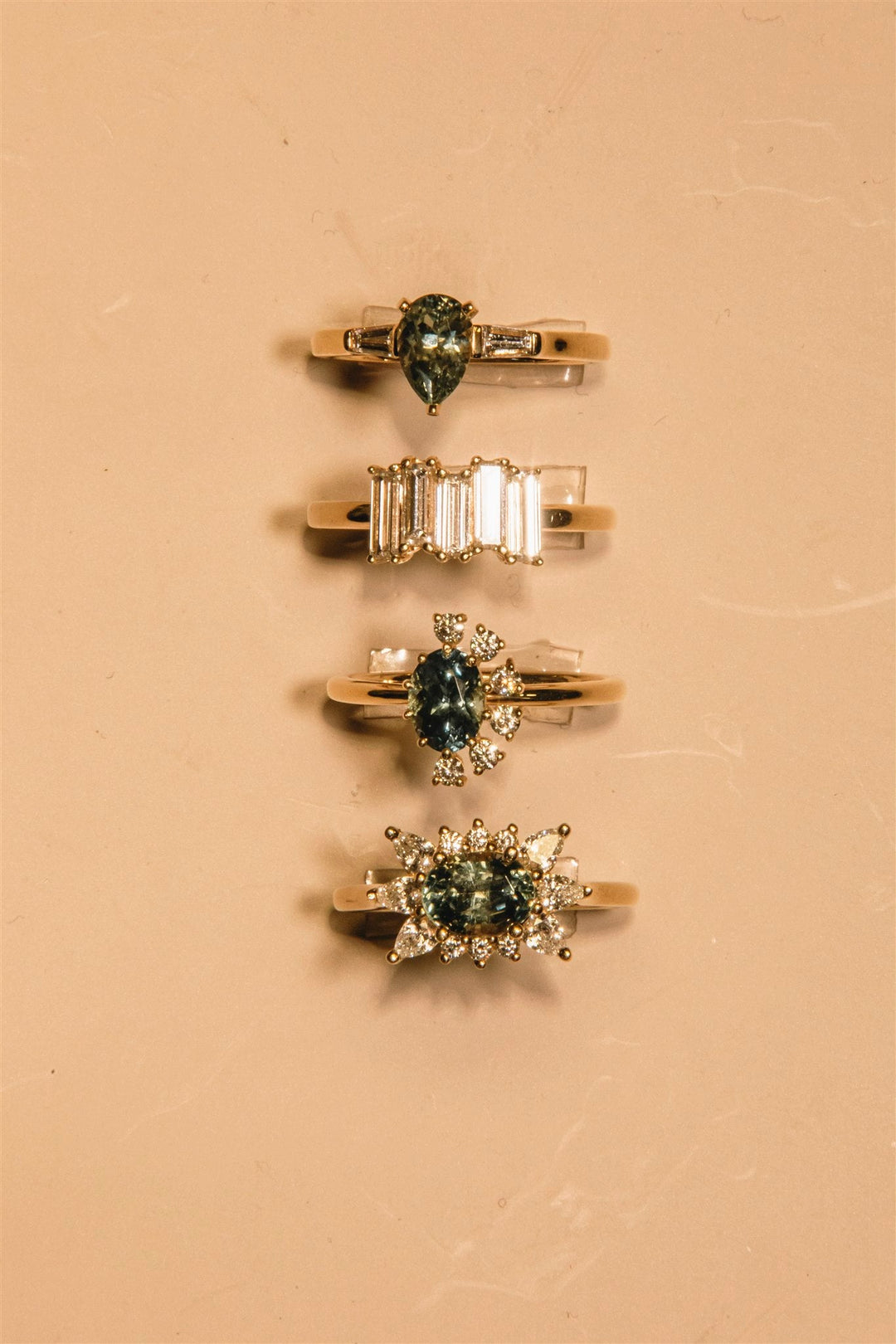
Teal is the signature modern Montana color and the most frequently chosen for engagement work. It sits between blue and green, often shifting through the day, and many of the finest are parti-colored — two hues balanced in a single crystal.
Wearers who choose teal are usually marking a decision they have worked through rather than a milestone they have reached. The color's behavior — bluer in daylight, greener under a lamp — appeals to people who have made up their minds about something and want a stone that reflects how they got there.
Blue — for commitments held
The classical sapphire color, with a domestic origin most buyers do not know exists. Montana blues run from pale glacier tones to the saturated cornflower of a Yogo.
Blue Montana sapphires are most often chosen by people whose meaning leans into endurance. A commitment kept. A direction held over years. The sapphire's three-thousand-year symbolism — wisdom, fidelity, constancy — tracks the material itself: corundum is among the most physically stable substances a person can wear. Blue is the color most directly tied to that tradition.
Sage and forest green — for quieter wins
Green Montana sapphires are quieter in the market than teal or blue, which is what makes them the stone for a certain kind of wearer. People who choose sage tend to already know what they want and not need outside confirmation of it. They are not selecting the landscape's headline color. They are selecting the lodgepole, the river bend in October, the part most people walk past.
What we hear assigned to green sapphires: groundedness, growth that took time, a private accomplishment that does not need to be announced.
Golden and yellow — for things earned over time
Golden and warm yellow Montana sapphires are uncommon and have been quietly collected for years. They pair well with yellow gold, which warms the stone forward.
The pattern we see: golden sapphires are chosen to mark something that took a long time to come into. A practice maintained. A career arrived at through real work. Gold has carried this association across cultures for a reason — the warmth reads as the warmth of a thing that was not given.
Peach and pink — for softness that is not fragile
The rarest production tier, particularly in larger sizes. Peach and pink Montana sapphires are corundum at the same hardness as every other sapphire — second only to diamond — but they read as soft. That contrast is the appeal.
The wearers who choose pinks and peaches are usually marking something tender that they have no intention of being precious about. A child carried or born. A love settled into. A creative life claimed. The color is warm. The stone is durable. The two facts together are the point.
Parti-colored — for wearers carrying more than one thing
A parti sapphire holds two distinct color zones in a single crystal — most often blue in one area and green in another, visible in the face of a well-cut stone. The cutter orients the rough so both colors live in the gem at once.
These are the stones for wearers who are holding more than one thing at once and want a piece that acknowledges it. Career and family. Roots and movement. The decisive version of themselves and the searching one. A parti sapphire does not resolve those tensions. It records that the wearer is carrying them.
How to find your color
The pattern that holds across years of this work: people do not choose the color that matches their stated goal. They choose the color that matches their current moment.
The practical version: look at a range of colors in person, or in honest light on a screen. Notice which one you keep returning to. That stone is usually telling you something about where you are. Trust it before you talk yourself into the more expected choice.
Every Montana sapphire we set comes with its deposit named and its treatment status disclosed. That is the documentation. The meaning — the part the stone is actually for — is yours to assign.
Explore the Montana sapphires currently in our collection →
Elizabeth Graham is the founder of Talismania, based in Red Lodge, Montana. Read the complete guide to Montana sapphires for the full background on the stones — where they come from, how they are treated, and how they are valued.