
Sapphire, the September Birthstone — Written From Montana
Sapphire is the birthstone for September. That part is easy to find. What is harder to find is a straight answer about where American sapphire actually comes from, and what to look for if you are buying one.
I make jewelry in Red Lodge, Montana, a few hours from the deposits I buy out of. So this is the version I can write honestly.
Where American sapphire comes from
Montana. Not exclusively — corundum turns up in a handful of other states — but commercially, this is the source. The stones were found here in 1865 by placer miners working for gold, who kept pulling heavy colored pebbles out of their sluices and setting them aside. The deposits have been worked, abandoned, and reopened ever since.
Three areas produce most of what reaches the market: Rock Creek near Philipsburg, the bars along the Missouri, and Yogo Gulch in Judith Basin. They do not produce the same stone. The complete guide to Montana sapphires covers each of them.
What a sapphire is
Corundum. The same mineral as ruby, and the only difference is chromium, which turns it red. Everything else in the family is a sapphire, including the ones that are not blue.
It sits at 9 on the Mohs scale. One step below diamond, and a long way above most of what people wear every day. That is the practical case for sapphire: it is a stone you can put on and stop thinking about.
Montana sapphire is not blue by default
September is usually illustrated with a deep cornflower blue. That is one Montana color among many.
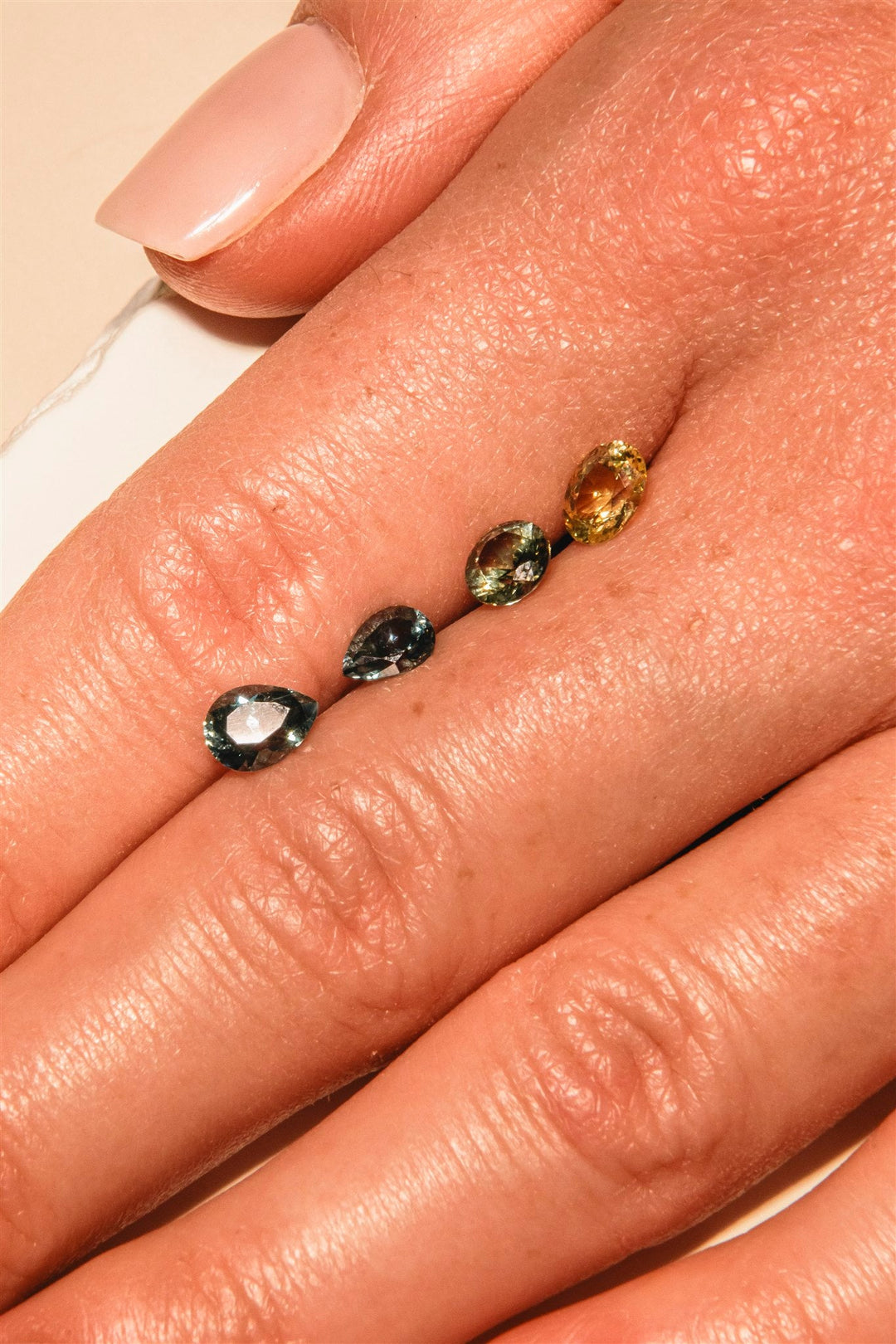
The alluvial deposits produce teal, sage, silvery green, golden, peach, and parti stones that hold two colors at once. If you are buying for someone born in September, you are not obligated to buy blue. What each color tends to mean is a longer conversation.
What to know before you buy
Size availability is real. Montana sapphires are rarely found large. Above a carat the pool narrows quickly and the price climbs with it. Below a carat, you have range.
Heat treatment is standard. Nearly all Montana sapphire on the market has been heated to bring the color forward. It is permanent, it is normal, and it is not a flaw — but a jeweler should tell you. Mine are heat treated unless I note otherwise on the piece. More on our materials and craft.
Cut matters more than carat here. These stones are cut for color rather than for maximum weight, which is why two sapphires of the same size can look nothing alike.
Ask where it came from. Not every seller can tell you which deposit a stone was pulled from. It is a fair question and the answer says something about the supply chain behind it.
Wearing it
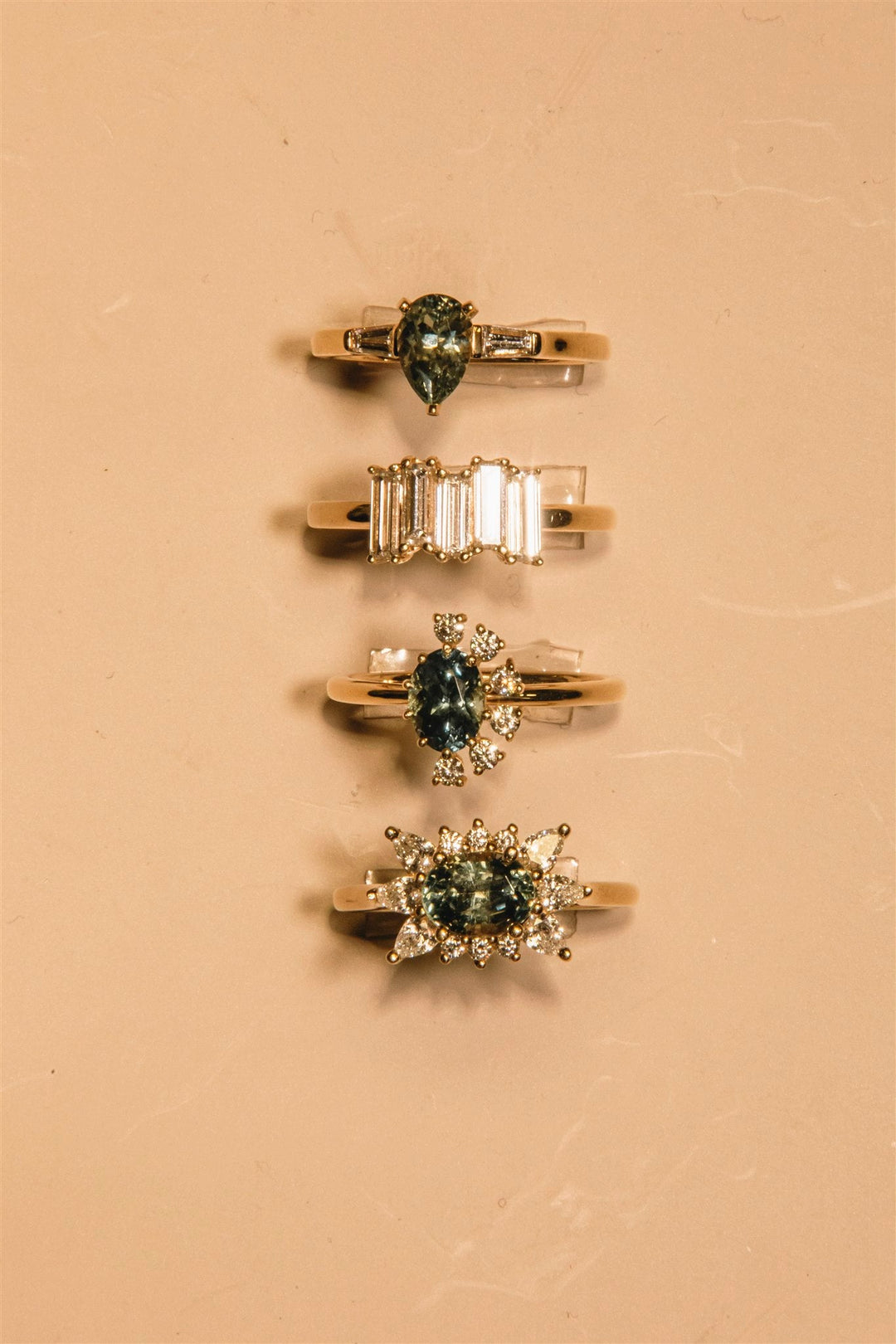
A birthstone is a small piece of inheritance you did not choose. What you do with it is the part you decide. A September stone can be a stud you never take out, or a center stone you build a ring around twenty years from now.
Either way, it should be a stone you would have picked regardless of the month.
Take a closer look at the Montana sapphires currently in our collection →
Elizabeth Graham is the founder of Talismania, based in Red Lodge, Montana.