
How to Clean Fine Jewelry — A Materials Guide From a Montana Jeweler
Cleaning fine jewelry well comes down to one principle: every material has a method that works for it, and a method that damages it. Use the right one for the right piece, and you can keep a collection looking the way it did when it was new for decades. Use the wrong one — even out of good intentions — and you can do real damage in a single attempt.
This is the practical guide. Cleaning methods, materials, and when to put the piece down and bring it to a professional instead.

How to clean by material
Gold
Gold is one of the easiest fine materials to clean at home. It does not tarnish, resists most chemical reactions, and tolerates gentle cleaning well.
Method:
- Mix warm water with a few drops of mild dish soap
- Soak the piece for 15–20 minutes
- Use a soft brush — a baby toothbrush works well — to gently work through any buildup, especially around prongs and details
- Rinse with cool, clean water
- Dry with a soft, lint-free cloth
What to avoid: Bleach and chlorine weaken gold alloys over time and can cause stress cracks at solder joints. Avoid harsh abrasive cleaners or anything labeled for kitchen surfaces.
Silver
Silver tarnishes naturally with air exposure, but most tarnish is reversible at home.
Soap-and-water method (gentle, for everyday cleaning): the same approach as gold — warm water, mild soap, soft brush, dry thoroughly. Tarnish responds best when caught early.
Baking soda paste (for moderate tarnish): mix baking soda with a small amount of water into a paste, apply with a soft cloth in gentle circular motions, rinse and dry.
Aluminum foil method (for heavier tarnish): line a bowl with foil, add a tablespoon each of baking soda and salt, pour in hot water, soak the silver for 2–3 minutes. The reaction transfers the tarnish from the silver to the foil.
Important: the aluminum foil method involves a chemical reaction that can also remove intentional oxidation. Do not use it on antique silver, oxidized finishes, or any piece where the darkening is part of the design. Use the gentler baking soda paste in those cases.
How to clean by gemstone
The relevant axis for cleaning gemstones is whether the stone is hard and stable (diamonds, sapphires, rubies) or soft, porous, or delicate (pearls, opals, emeralds, turquoise, amber). The two groups want completely different treatment.
Diamonds, sapphires, rubies
These are the hardest gems in common use (Mohs 9–10) and tolerate the gold cleaning method above well.
Method:
- Soak in warm soapy water for 15 minutes
- Use a soft brush to work through buildup around the setting — most loss of brilliance is just skin oil and lotion residue gathering on the underside of the stone
- Rinse, dry, and let air-dry on a soft cloth before returning to storage
A diamond or sapphire that has gone cloudy is almost never damaged. It is dirty. Clean cleanly, and the stone returns.
Pearls and opals
Both are organic or porous and require fundamentally gentler handling.
Method:
- Wipe with a slightly damp soft cloth after each wearing — this is the single most important thing
- Do not submerge pearls or opals in water
- Never use ultrasonic cleaners on either
- Store separately from harder pieces in a soft-lined pouch
The simple rule for pearls: they should be the last thing you put on and the first thing you take off, kept away from perfume, hairspray, and any solvent.
Emeralds, turquoise, amber, and other softer or porous stones
Emeralds are often oiled or resin-treated to fill natural inclusions. Turquoise and amber are porous. Amber is also quite soft (Mohs 2–3) and scratches easily.
Method:
- Wipe with a damp cloth, never soak
- No ultrasonic cleaners
- No harsh chemicals, no commercial jewelry cleaners
- Store away from harder stones to prevent scratching
If a stone in this category has lost its luster, the right move is usually a professional jeweler rather than a home cleaning attempt.
What we use at Talismania, and what we recommend at home
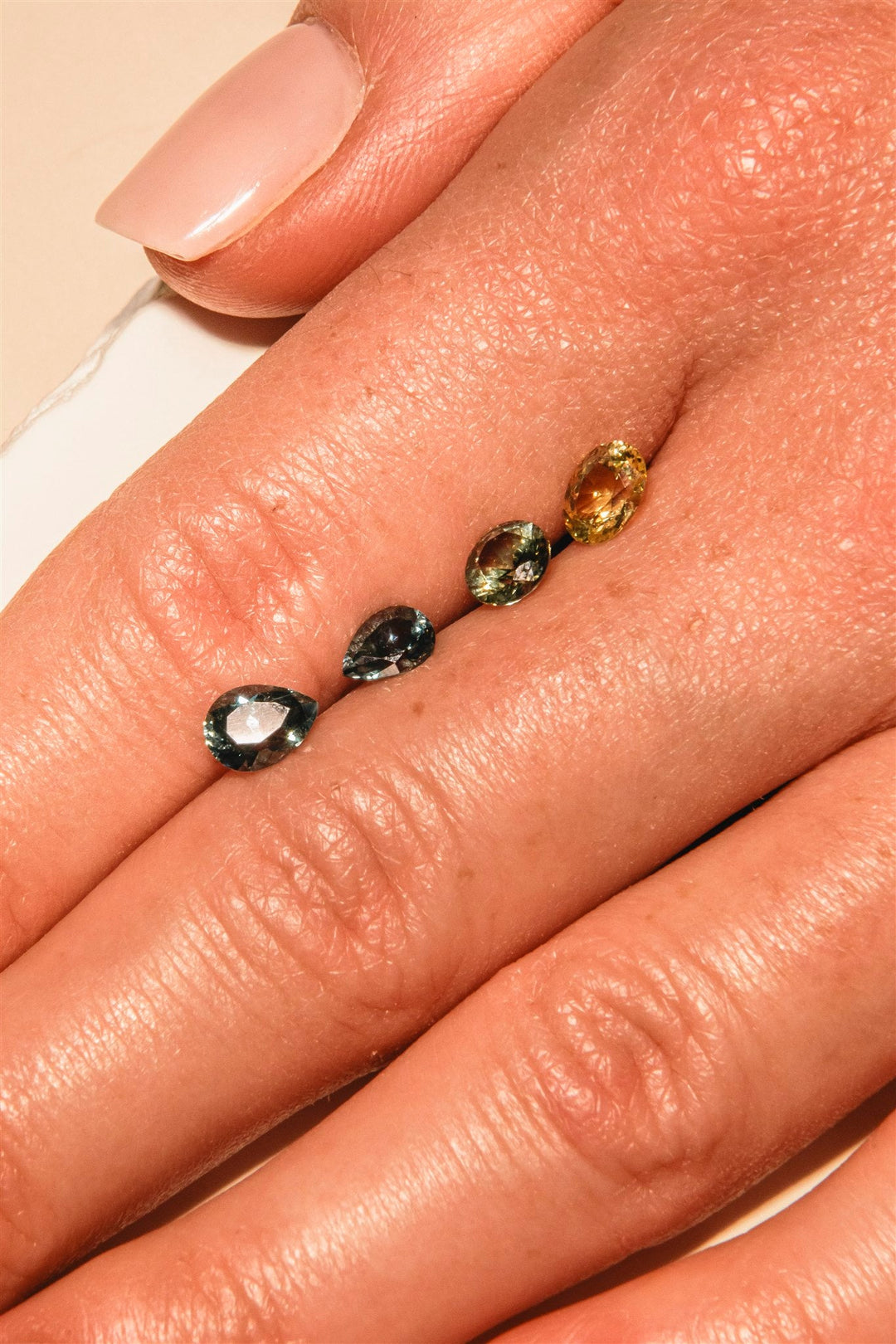
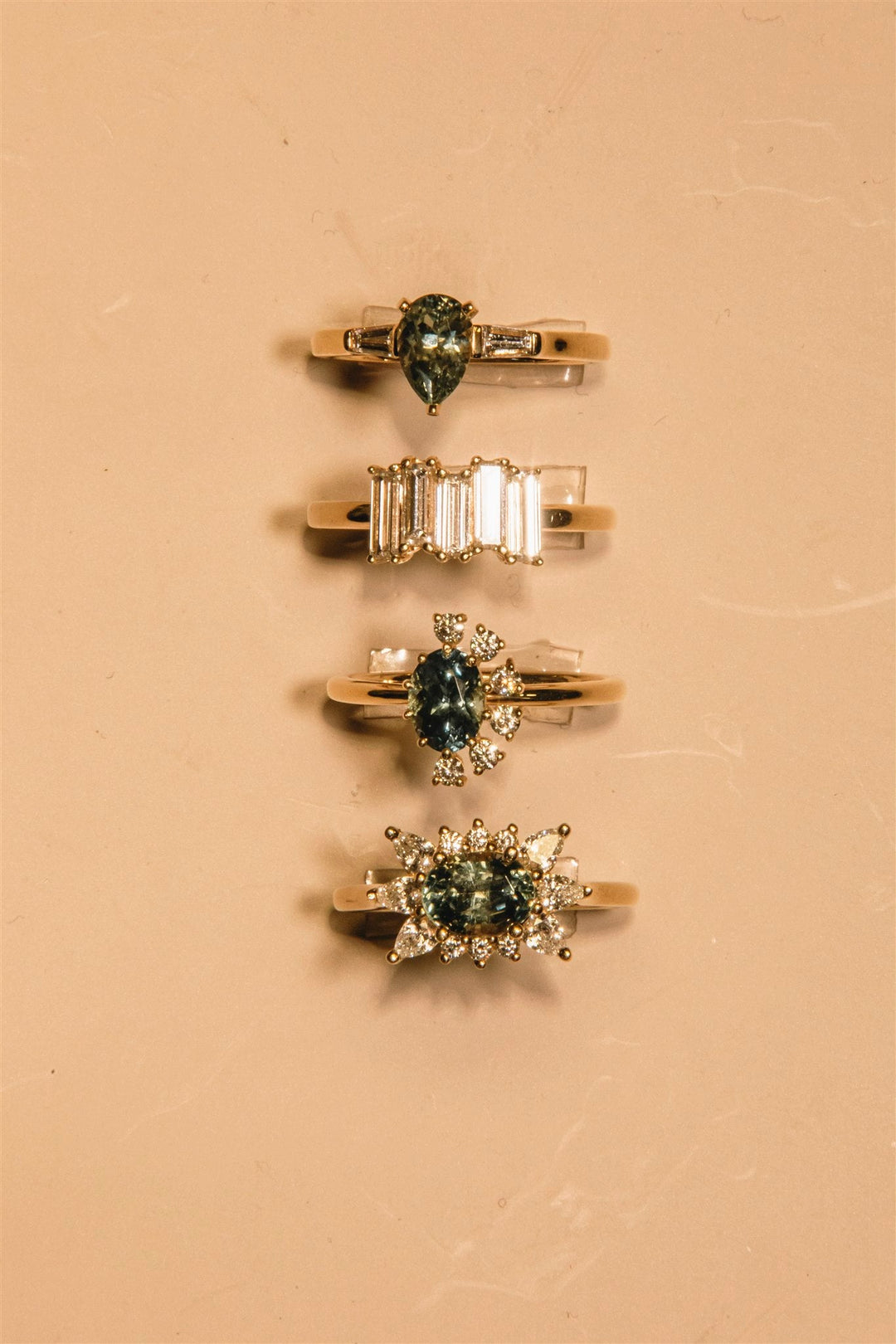
Every Talismania piece is built in solid 14K gold, set with Montana sapphires, natural diamonds, and the occasional ruby. For our own work, the gold-and-sapphire cleaning method above is what we recommend to clients: warm water, mild soap, soft brush, gentle drying. It handles the great majority of cleaning needs without risk to the stones or the metal.
For anything more involved — a setting that has loosened, a stone that has lost its seat, a piece with sentimental or financial value beyond a casual home attempt — bring it in. A jeweler with a loupe and proper tools can do in twenty minutes what a household method cannot do safely at all.
When to bring a piece to a professional
Some situations call for expert handling rather than a kitchen cleaning attempt:
- Heirloom pieces — older settings, vintage solder joints, and historical materials are unpredictable. The risk of damage outweighs the convenience of a home clean.
- Loose or rattling stones — if you can feel a stone move in its setting, stop wearing the piece and bring it in. Continued wear can lose the stone entirely.
- Pieces that have lost stones before — the setting may need to be retipped or rebuilt rather than just cleaned.
- Deep ultrasonic cleaning — useful for many pieces, but only when a jeweler can verify the stones tolerate it. Some gems and treatments do not.
- Annual prong checks — once a year, any piece with a stone in a prong setting benefits from a professional inspection. A loose prong caught early is a five-minute fix. A lost stone is not.
Daily and routine practices that extend cleaning intervals
The simplest way to clean less often is to handle pieces well between cleanings.
- Remove jewelry before bathing, swimming, exercising, or applying lotion. Most of what builds up on a piece between cleanings is residue from products that did not need to be on the jewelry in the first place.
- Put jewelry on last when getting dressed, after makeup and perfume have been applied and settled.
- Keep a small soft dish near the bathroom or bedside for pieces you remove at the end of the day. A polishing cloth nearby allows for a ten-second wipe-down that meaningfully extends time between deeper cleanings.
- Check clasps, prongs, and chain links visually every few months. Early detection prevents the kinds of damage that cannot be cleaned away.
A note on cleaning frequency
For pieces worn daily — a wedding band, a daily-wear necklace — a light home cleaning every few weeks keeps them looking new. For pieces worn occasionally, clean before storage if they need it. Annual professional inspection for any piece with set stones is the practice that catches problems before they become losses.
Fine jewelry is built to last lifetimes. The cleaning practices above are what allow it to.